


The foreign exchange market is the largest financial market in the world, where crazy money is traded every day - trillions of dollars! The peculiarity of this market is that it is available all over the world and works continuously. Private investors, banks, companies, governments, and anyone who wants to trade currencies, which has a huge impact on the global economy. But how does the foreign exchange market work, what does it consist of, what are the risks associated with this process? Let's take a closer look at this.
What is the foreign exchange market?
The foreign exchange market (Forex – FX) is a part of the financial market, which is the largest market in the world with a daily turnover of 5 trillion US dollars. It is used to trade non-cash money, i.e. non-cash payment instruments that are bought, sold or exchanged for foreign currency. The risks and rewards of trading foreign currency arise from exchange rate fluctuations.

Foreign exchange (¤) is a non-cash balance of foreign currency that can be bought, sold or exchanged in the foreign exchange market. Trading in the supply and demand of currency takes place directly in a decentralized, so-called over-the-counter market. In this market, participants carry out transactions without an exchange as an interface and use a dealer network of market makers, who, in essence, determine the bid and ask (D/S) rates for foreign exchange transactions. The market participants are mainly commercial, private and central banks, which is why it is also called interbank trading. However, recently, FX trading has also been opened to private entrepreneurs and is organized through forex brokers.
Currency rates and fluctuations
Exchange rates show the value of a national currency in foreign terms. This value is determined by the ratio of demand = supply on Forex. Exchange rate fluctuations are influenced by:
The key interest rate determines supply
The rate set by central banks, such as the European Central Bank or the Federal Reserve, indicates the amount of national money available and increases or decreases the value of ¤. The less money in circulation, the higher the value on FX, the more, the greater the loss of value.

Interventions
Upper and lower intervention points usually regulate exchange rate fluctuations. If the exchange rate falls below or exceeds the central bank's established exchange rate corridor, mechanisms come into play that regulate the exchange rate ¤ within the corridor.
Central banks use these mechanisms to control inflation, maintain the competitiveness of their own currency, or to guarantee its overall stability: in FX, such interventions manifest themselves in buying or selling ¤ in order to increase or decrease the exchange rate of their own currency.
Such interventions are mainly used by central banks of developing countries and countries with economies in transition. In extreme cases, they can serve as an “economic weapon” in a currency war. Exchange rates are the result of supply and demand.
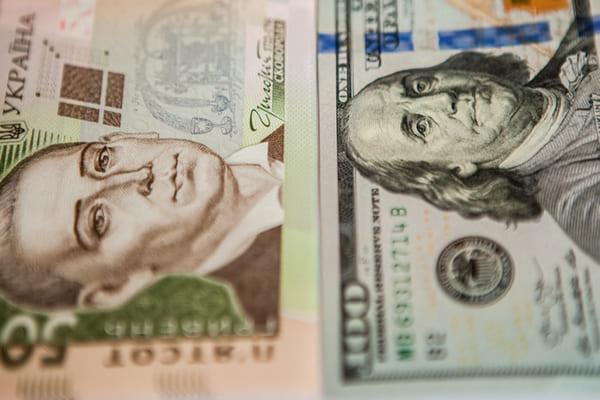
The US dollar is by far the most important currency worldwide. The most commonly traded currency pair is the euro/dollar. Trading takes place around the world 24 hours a day, but usually only on business days. The euro is the most important ¤ for Swiss SMEs. It leads by a clear margin in both exports and imports, followed by $. The UK with the British pound is in third place, followed by China. Since the Chinese yuan is only traded in a limited volume (it is not freely convertible), many transactions with China are settled in US dollars or euros.

The following currency pairs are most often traded:
- USD/EUR
- USD/JPY (Japanese Yen)
These currency pairs are particularly attractive to Forex beginners as they promise stable exchange rates, a constant D=S ratio, and high liquidity.
The number of FX participants interested in trading is always huge: from private speculators looking to make a quick profit to central banks trying to control the amount of money in circulation in a particular currency. However, by far the most important players in FX are the large international banks. In this sector, Citigroup, Deutsche Bank, Barclays, JPMorgan and UBS account for about 50% of global trading.
Forex operates electronically through a global banking network. It has no centralized location and trading can take place anywhere through your chosen forex broker. This also allows you to trade at any time as long as it is during trading hours in one of the four major trading centers (London, New York, Sydney and Tokyo).
Main factors influencing currency rates
The FX rate is a dynamic indicator that reflects the state of the economy, political situation and financial stability of countries. The movement of exchange rates depends on a number of interrelated factors that can significantly affect their value in both the short and long term. Let's consider the key factors below:

1. Economic indicators
- Gross Domestic Product (GDP): A high level of economic growth strengthens the national currency (fiat), as it indicates a healthy economy.
- Inflation rate: Low inflation usually means stability of fiat, while high inflation causes depreciation.
- Trade balance: If a country exports more than it imports, its fiat becomes attractive to investors.
2. Monetary policy
- Discount rate: Increasing interest rates makes it more attractive to investors due to higher returns on investment.

- Central bank actions: for example, FX interventions can artificially change its value to support the economy.
3. Political and social stability
- Elections and referendums: for example, election results, votes on key issues (Brexit), can radically change its position.
- Geopolitical conflicts: wars and tensions between countries reduce confidence in the currency of the state at the epicenter of events.
- Supply and demand
- The balance between demand and supply plays a key role in determining its price.
5. Global financial trends
- World events (economic crisis or development of new technologies).
6. Psychological factors
- Investors' expectations and behavior often become decisive.
How exchange rate fluctuations affect the economy
Exchange rates are one of the key factors determining the economic condition of a country.

1. For foreign trade
A floating exchange rate directly affects the cost of exports and imports:
Weak currency:
- Positive: exports become cheaper for foreign partners - the competitiveness of products on the world market increases.
- Negative: imports become more expensive - leading to higher prices on the domestic market.
Strong currency:
- Positive: imported goods and services are becoming cheaper - beneficial for consumers.
- Negative: exports become more expensive, reducing demand for national goods abroad.
2. On inflation
- It has a direct impact on the price level in the country.
- It leads to higher prices for imported goods, including energy, technologies, and raw materials.
3. For business

- Fluctuations can affect the financial performance of businesses, depending on their dependence on imports and exports:
- Exporters make more profit with a weak national currency, because they earn in a stronger foreign currency.
- Importers face additional costs when a country's currency depreciates — leading to reduced profits or higher prices for goods for end consumers.
4. For investment
- Foreign Direct Investment (FDI): A depreciation can make a country more attractive to foreign investors as assets become relatively cheaper.
- Portfolio investments: Investors can avoid currencies with high volatility, preferring stable economies.
5. On debt obligations
Fluctuations are especially important for countries with external debt in foreign currency:

Weak:
- Increases debt service costs. This can cause budget deficits and make it difficult to implement social programs.
Strong:
- Facilitates debt servicing, reducing the burden on the state budget.
6. For the tourism sector
Directly affects the attractiveness of the country's tourist destination:
Weak:
- Attracts more foreign tourists as vacations in the country become cheaper.
- Increases revenues from tourism and the hotel and restaurant business.
Strong:
- Makes travel to the country more expensive for foreigners, reducing tourist flow.
7. On the population
Exchange rate fluctuations directly affect the well-being of citizens:

Positive consequences:
- Cheaper imported goods, coupled with a strengthening currency, increase the purchasing power of the population.
Negative consequences:
- When the national currency depreciates, prices for imported goods increase and the standard of living deteriorates.
- Savings in a depreciating currency lose their value, forcing people to look for alternatives — investing in cryptocurrency, gold, or real estate.
8. For financial stability
High FX volatility can create financial instability:
- Sharp changes in exchange rates can cause panic among investors and lead to capital outflows.
As you can see, fluctuations are an important factor that affects various aspects of the economy: from trade and business to the standard of living of the population. While an increase or decrease in the exchange rate can bring certain benefits, it also carries risks, especially for countries with high dependence on external markets or a significant amount of foreign debt. Understanding the mechanisms of the impact of currency fluctuations allows governments and businesses to better adapt to changes and reduce potential negative consequences.
Conclusion
Forex is a complex but extremely important part of the global financial system. Understanding the principles of its functioning and the factors affecting currencies allows you to make informed financial decisions. Despite the risks, a competent approach to currency trading can be an effective tool for achieving financial goals.


